tab · file · click · paste · scroll
It captures context without the noise.
Quiet snapshots of what's on your screen. Recall filters out the noise immediately. Only meaningful activity survives.
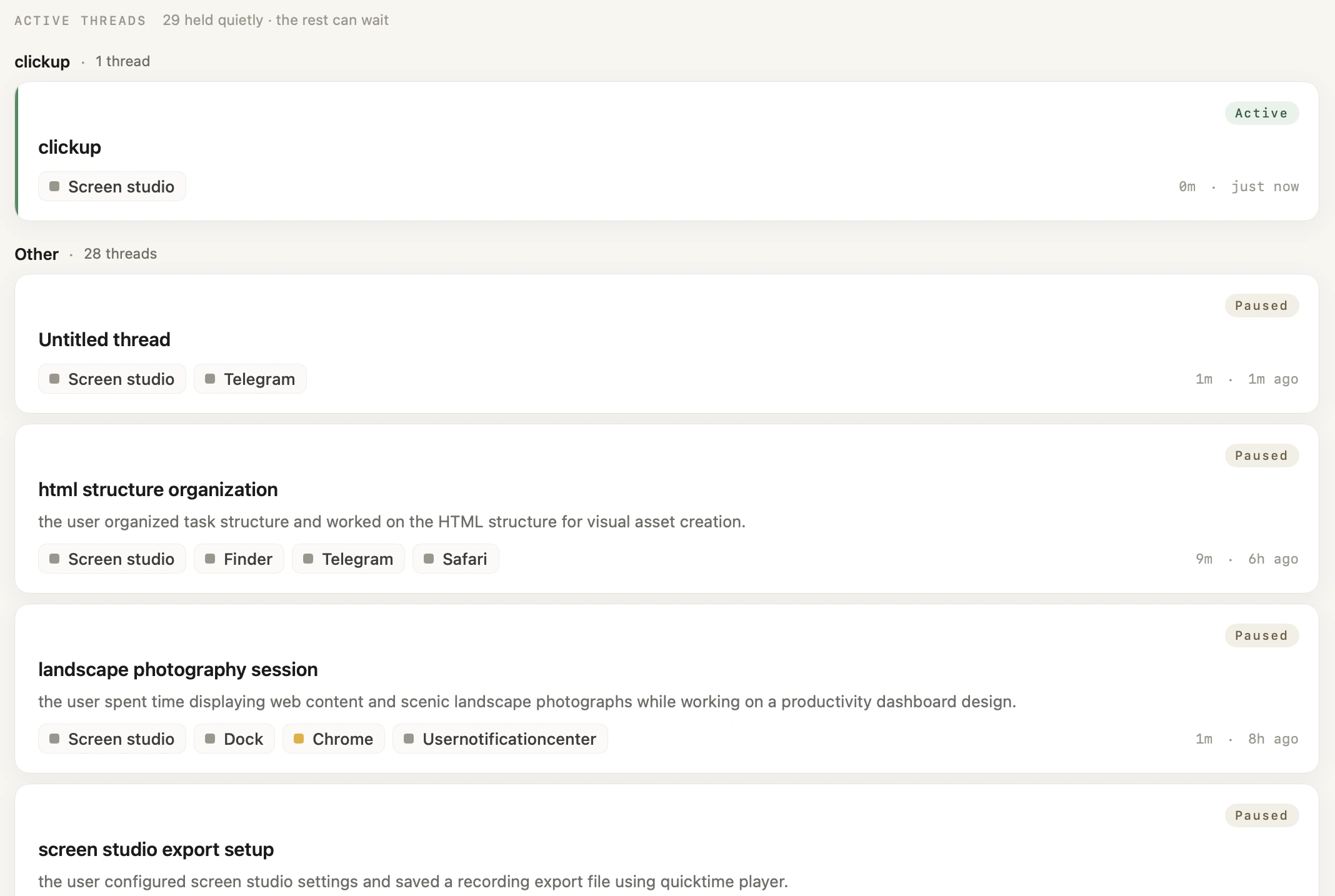
Recall runs quietly in the background while you work. When focus breaks, one tap brings back the file, tab, and thought you were in. No tasks to manage. Nothing to set up.
You forget what you opened, why you opened it, and what the real task was supposed to be.
Coming back from a meeting takes longer than the meeting itself. The thread is somewhere on this screen.
“You left Chrome.” Yes. With twenty-seven tabs and no idea which one was the work.
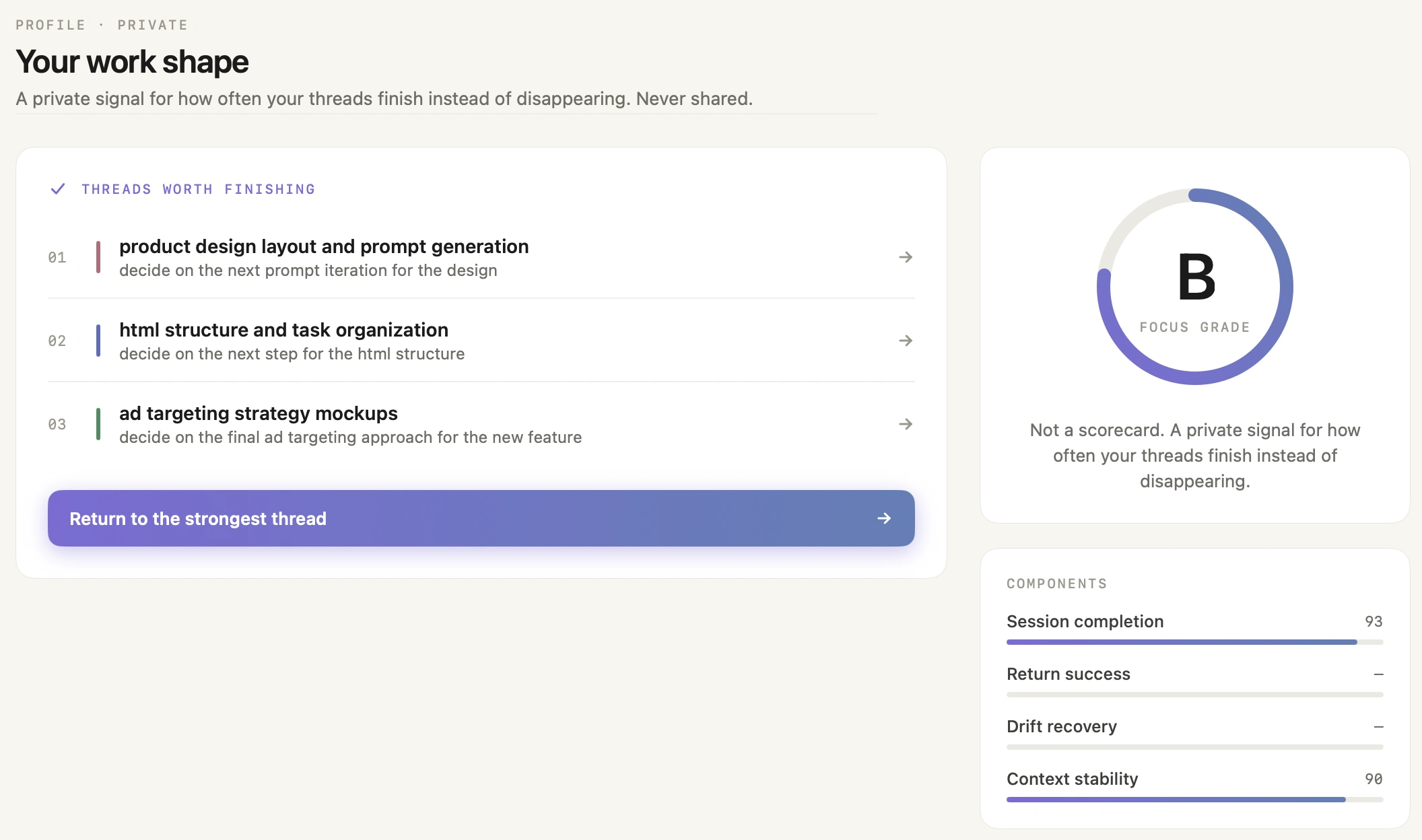
The day passes. You worked all of it. You can’t quite say what you finished.
You don’t need another planner. You need help holding what’s already open.
The file is open. The task is not. You can see the pieces, but not what you were doing.
While the day pulls at you, Recall is already watching the pattern. Quietly. From the first tab.
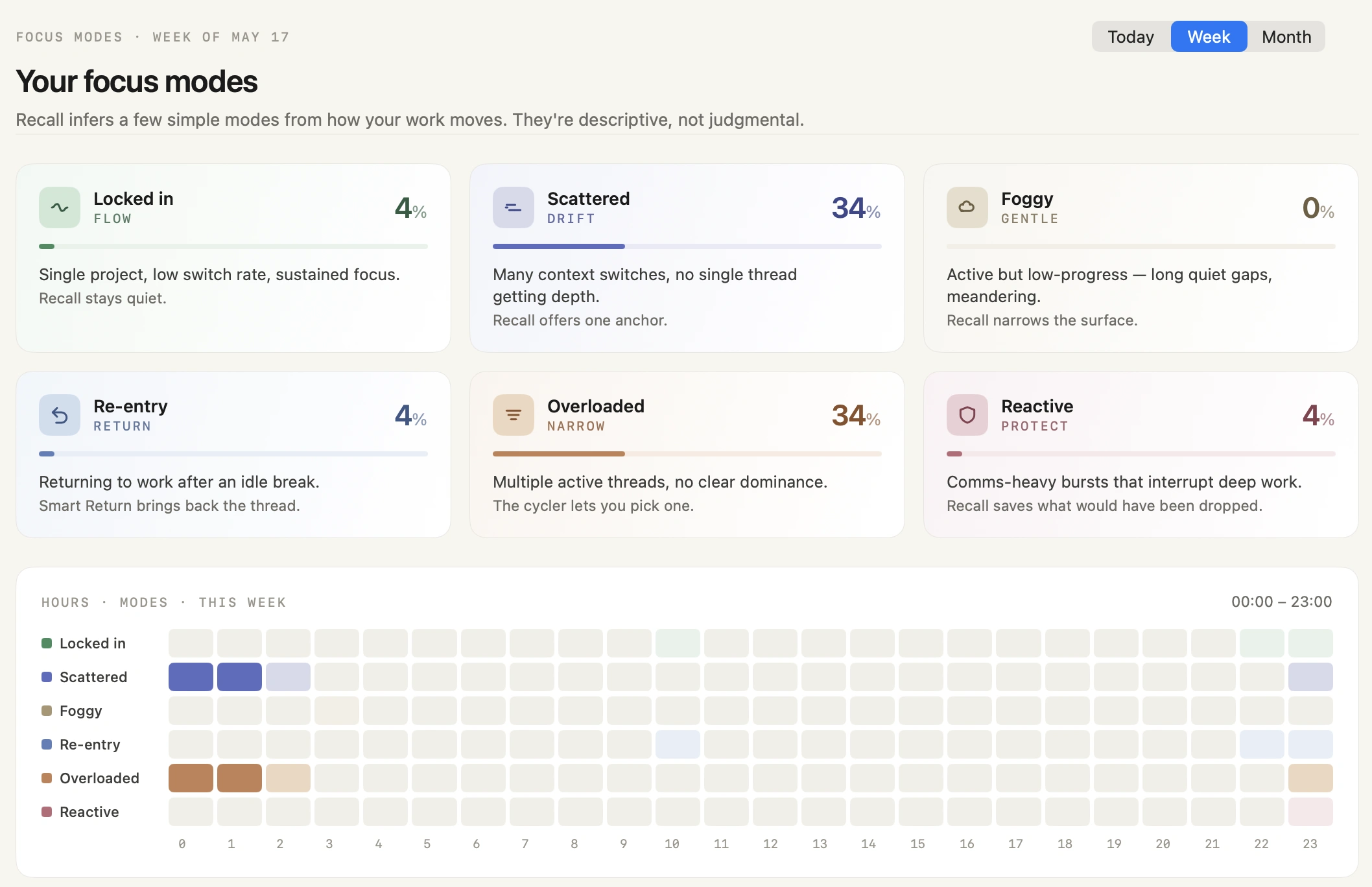
Some days you are locked in. Some days you are scattered. Some days you just need one thing at a time. Recall adapts to the way your focus behaves based on how your workday is unfolding.
No nudges. No cards. Recall just holds the thread quietly so you can keep going. When you finally lift your head, your day is already named.
Recall does not send you back to an app. It brings you back to the real work: the file, tab, note, message, and thought you were in before the day pulled you away.
Each one nags. None of them know what you were actually doing.
Recall does not ask you to set anything up. It quietly follows the shape of your work and re-stitches the thread when it starts to fray.
Quiet snapshots of what's on your screen. Recall filters out the noise immediately. Only meaningful activity survives.
Forty-three apps and tabs reframe themselves into one human-readable thread: "Hero copy edits, Recall homepage."
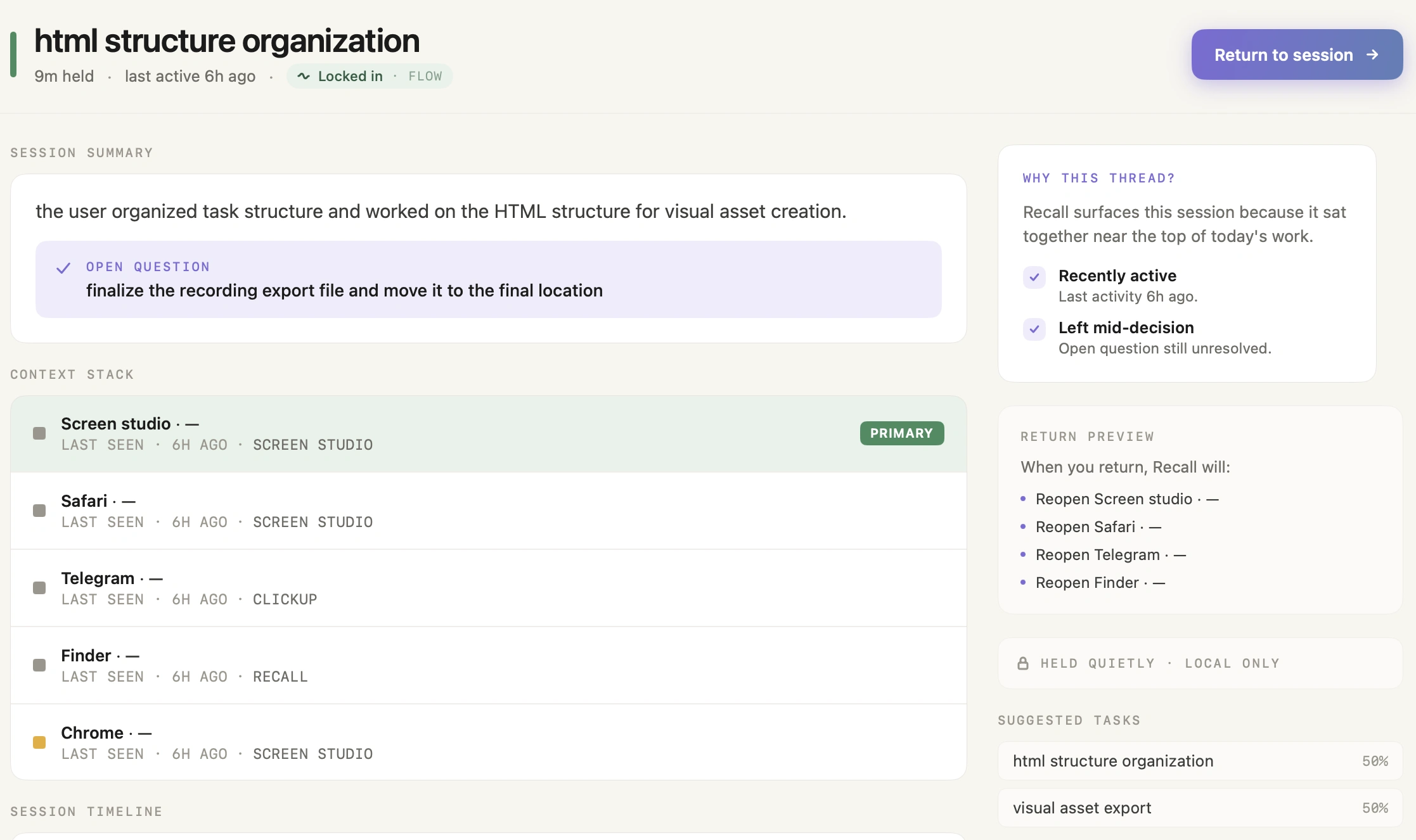
When the thread starts to fray, through lunch, a Slack rabbit hole, or a forty-minute Wikipedia or YouTube detour, Recall holds your place quietly until you're back.
A context card with the real work: the file, the tab, the doc, the thought you left mid-sentence. One tap. You're back, not at the start, but exactly where you stopped.
No tasks to file. No timers to start. Recall sits in the background and notices what you were doing. The only thing you ever do is tap to come back.
The average distracted desktop session loses 18 minutes to re-orientation. Recall returns most of that.
An end-of-day summary that's a real story, not a list of app names. So you know what you actually moved.
Some days are foggy. Recall doesn't grade you. It adapts and keeps the thread for when you're ready.
Every time you re-enter a task cold, you lose 10 to 20 minutes rebuilding context. Recall hands it back instantly, so you spend that time doing, not reconstructing.
Recall is built with privacy at its core. Your work context stays on your machine. We designed the product so you never have to choose between focus support and trust.
Read our privacy principles →Every snapshot, every filter, every model call is designed to stay on your machine. No hidden pipelines.
No lectures, no "just try harder." Gentle nudges that respect how your brain actually works, built by people who live the pattern.
We don't have an ad business and we won't start one. Your context isn't a product we monetize.
One key. Recall stops capturing. One menu. The history is gone. You stay in control.
Recall is for you, not for your employer to score you.
Recall can reduce the extra apps you use to track focus, rebuild context, or restart your day, while helping you get back to the real work inside the stack you already use.
Focus timers, time trackers, session logs, and daily reset tools.
Plus the long tail not counted here: Pomodoro tools, tab / session managers, time trackers, focus blockers, daily planners.
The apps where work actually happens.
the note you were editing
the frame you were reviewing
the issue you were checking
the thread that pulled you away
the file and context you left
the meeting that broke the flow
No migration. No tagging. No new system to maintain.
Recall runs in the background, groups your work into real sessions, notices when your focus drifts, and gives you one calm path back. No tagging. No streaks. No productivity theater.